
Tag: anxiety

Dreams or events where the emotional tone includes fear, dread, tension, or internal panic — regardless of external events.

  • The Alligator in the Hallway

    The Alligator in the Hallway

    The Dream

    Living in a house
    with another family.

    It was decorated
    in the Addams Family style—
    I loved it.

    We’d just bought
    a new alligator
    for the hallway.

    I was turning some lights off;
    it was too bright.

    —

    I picked a man
    to partner with.

    I knew
    he would be a good father
    to my children.

    —

    Old work colleagues
    joined me at the house.

    We were happily reunited—
    jovial.

    —

    I was getting ready
    for a lecture.

    I was so late.

    As I entered the hall,
    everyone
    was leaving.

    The Meaning

    the alligator in the hallway
    My inner beast has become a decorative accessory. Having finally got a grip on that energy, I’ve placed it front of house. This indicates I’m not hiding the more fearful elements of my personality and whilst they’re no longer in control of me, they serve as a warning to all who enter.

    turning off the lights
    I’m managing the energy in my space. Too bright? That’s overstimulation. I’m not seeking clarity at all costs. I don’t need every corner of my psyche floodlit; mystery and shadows are part of the package now.

    choosing a father
    Intentional choices, not just for romance, but legacy. I’m not dreaming of being saved, I’m choosing a reliable co-pilot. 

    old work colleagues
    Reconnecting with past versions of myself, or perhaps reconciling with abandoned parts of my identity. It’s jovial, not regretful. These are my professional ghosts, and now they’re guests in my new kookie home.

    missing the lecture
    I’m scrambling for something—knowledge, approval, relevance—and yet I’m arriving too late. Everyone’s leaving. There’s a fear inside of lost time, of missing out.

    What Lingers…

    What if taming the inner beast doesn’t mean hiding it?

    What if wisdom doesn’t come from the lecture hall, but shows up in hallways and hindsight?


    Marginalia

    Looking back on this dream, it has the cringe energy of “Welcome! Come on in,” followed immediately by “Watch the alligator—he bites.” I explore this a bit more in my poem What I Carry Isn’t All Mine.

    It takes time to feel okay with the parts of yourself that aren’t exactly socially smooth—like dropping truth bombs or asking questions that make people squirm.
  • How to Survive a Storm and Still Talk Shit

    How to Survive a Storm and Still Talk Shit

    The Dream

    A sea liner—
    a group of women with me.
    The captain struggled
    to steer the ship
    through a storm.

    The women—
    they wanted to lay mattresses
    on the floor,
    to soften our fall.

    I persuaded them not to—
    the mattresses
    would make us
    more unbalanced.

    I suggested: clear the room.
    When the ship loses control,
    at least we won’t fall
    on broken glass.

    —

    On land.
    The UK coast, somewhere.
    Cold.
    Sharp.

    I saw a penguin
    on the hill—
    I knew:
    this was a bad sign.

    A scream behind me:
    Run!

    I ascended the hill,
    up a narrow,
    steep,
    slippy,
    snowy path.

    A tsunami approached.
    Something else too—
    a wild animal
    I never saw,
    but I knew
    was there.

    —

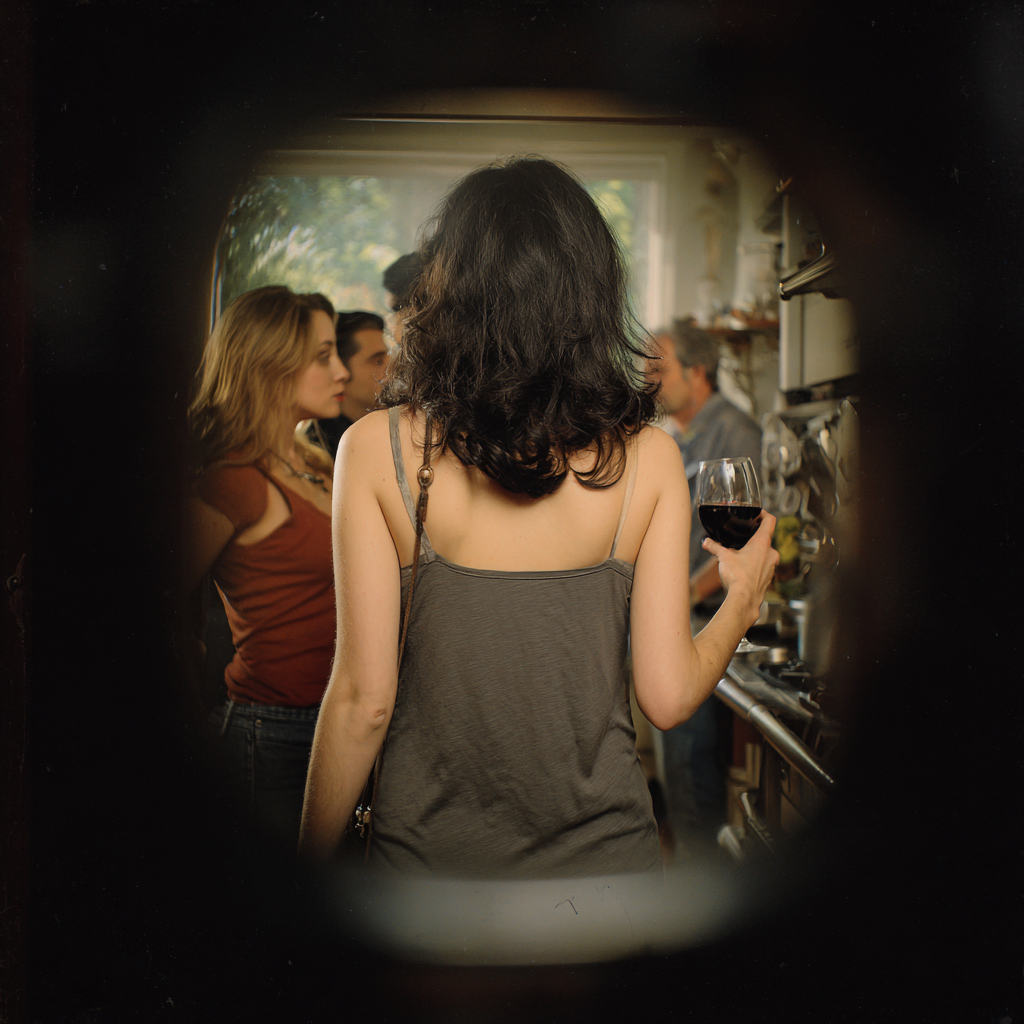
    Later, at a friend’s house,
    before going out
    for the night.

    I poured a glass of wine.
    I smoked a cigarette.
    (I haven’t smoked in ten years.)

    My bestie complained
    about the dog
    bringing ‘field poo’
    into the house.
    (She meant mud.)

    I was talking,
    enjoying good company.
    I stood up and said:
    “I have to get ready,
    or we’ll never get out tonight.”

    I explained:
    “Once you change
    the way you see the field poo,
    you’ll feel differently.”

    “It’s not field poo.
    It’s the sustenance of life.
    It’s alive.
    It feeds us.
    Everything comes from it.
    Everything
    goes back
    to it.”

    The Meaning

    the sea liner and stormy sea
    A group of women = my school community and the instability that surrounds it. The mattress? More imbalance disguised as cushioning. For me, I insist on practical, proactive safety measures. Let’s not get cut by the glass that will inevitably smash. This reflects how I face chaos: instead of pretending I can soften the impact, I tidy my emotional room instead.

    the penguin and the tsunami
    A penguin? On a UK hillside? Even in the snow, this bird is out of place. The avian equivalent to an elephant in the room. And the voice behind me? My subconscious knowing there’s a reason to run. I don’t go side ways, I go up the steep hill, the hardest but safest route away from the danger. The tsunami? Overwhelming emotions. The wild animal? Anxiety, the always-present invisible stalker.

    wine, cigarettes, and mud poo philosophy
    Back on dry land: wine, friends and old bad habits. I return to the comforting ritual of “getting ready,” but with a TED Talk to my bestie on how actual shit is a life source.

    I’m full circle in this dream. I’ve weathered the storm. Ran hell for leather away from my anxiety, uncomfortable emotions and finally relaxed with a glass of wine and a fag whilst recounting that ‘shit’ is a matter of how you frame it.

    What Lingers…

    What if survival isn’t the end, but the beginning of something softer?

    What would it look like to stop bracing for impact and start making space to live?


    Marginalia

    A day or two before this dream, I woke with a sudden memory of yarrow, which prompted me to start taking it. This was the first dream I had after drinking yarrow tea—just days after leaving school—and clearly, my brain was trying to process what had happened. This dream marks the beginning of my log.

  • Jimmy | Residual Current

    Jimmy | Residual Current

    I’m asthmatic, I declared.
    The GP raised a brow.
    He tested, then explained,
    “No. You’re having panic attacks.”

    I didn’t understand.
    They came at night,
    when I was relaxed—
    not when I was anxious.
    I was twenty-one when they started.
    They’ve never left.

    —

    Twenty years later,
    I explained to my therapist
    (because we all need therapy, right?).
    I panic after the event—
    shame for what I’ve said,
    what I’ve done.

    And it feels like an electric shock.
    Like being plugged into the mains.
    I gasp—
    just one breath of air.

    “Any family history of electric shock therapy?”
    she asked—casually, curiously.
    “I’m not sure,” I said.
    “I’ll find out.”

    —

    Jimmy was my father’s uncle.
    Twenty-one, just a boy.
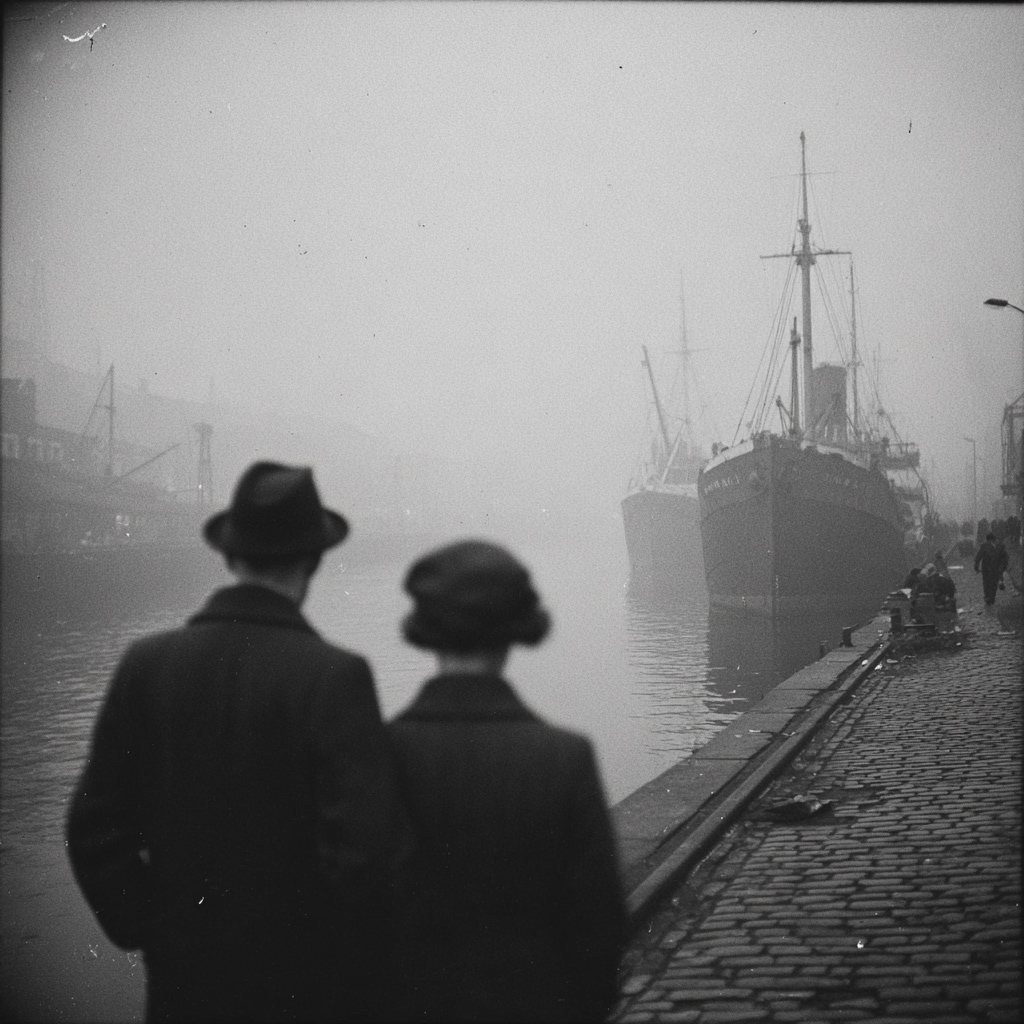
    A sailor in the merchant navy,
    on his way home.

    His family wait at the docks.
    But Jimmy doesn’t appear.
    He’s been badly, badly beaten,
    and taken into police care.

    Jimmy never came home.
    He was traumatised by the event—
    admitted to a psychiatric hospital.
    They tried to rehabilitate him,
    but he would always require full care.
    My grandfather couldn’t take him.
    No one could.
    So Jimmy was never released.

    —

    Forty years later,
    my dad found him—
    institutionalised,
    lost in the system for years.

    Jimmy spoke very little,
    and only repeated:
    “You better watch yourself…
    the Newcastle lads,”
    he said when they met.

    —

    I knew little of Jimmy,
    but my sister knew more.
    I asked her:
    “Did Jimmy receive electrotherapy?”
    “Almost certainly,” she said.
    “His records were lost—
    but they said
    he’d had all the top treatment.”

    Then she paused.
    “I never knew what to make of that.”

    I thought long and hard about Jimmy.
    What had he seen?
    What had he done?
    “I think he may have been gay,”
    I said.

    The merchant navy—
    a decoy of the time.

    —

    My aunt,
    a medium,
    said the same
    when she channelled him—
    twenty years ago.


    Marginalia

    Jimmy was institutionalised at the same age I started having panic attacks: twenty-one. They’ve never fully left me, and now I wonder—are they mine, or his?

    When I began using AI in my ancestral research, I learned more about Jimmy through his natal chart. It helped me understand why he may have been institutionalised, and how he might have coped.

    I don’t take everything AI says as gospel, but it gave me a sense of him—and how his experience might echo in my own chart.

    Ancestral trauma wasn’t something I’d ever considered until my therapist asked about it. I never expected astrology or AI to help, but out of curiosity, I uploaded my chart to see if it might offer direction. At the time, I was just trying to make sense of it all.