Tag: emotional evolution

Narratives that track growth, reframing, or psychic maturation — often after rupture, confusion, or self-reckoning.

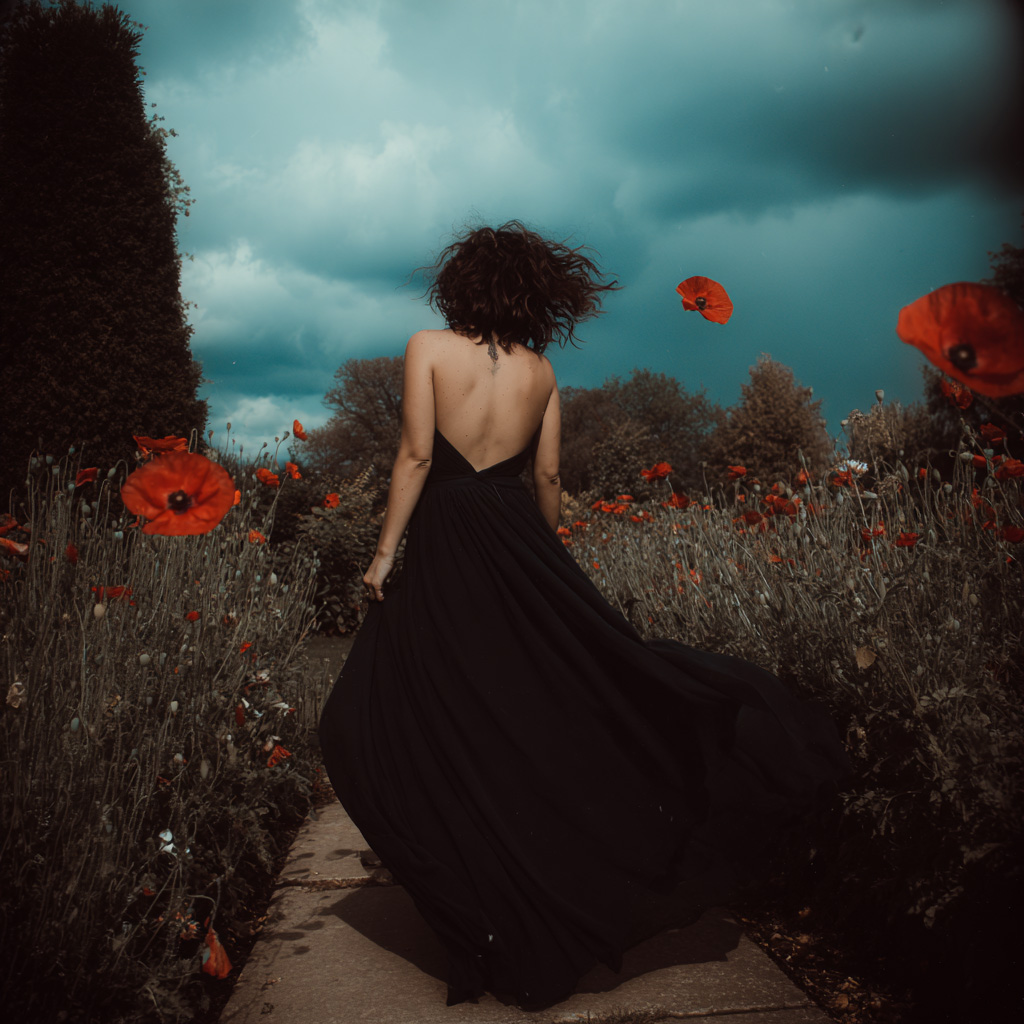
  • Poppy Seeds in a Rush of Yes

    Poppy Seeds in a Rush of Yes

    The Dream

    I dropped everything
    I went
    to the garden centre
    I bought poppy seeds.

    I was
    so excited.

    The Meaning

    dropping everything
    Freedom. Urgency. Joy taking precedence.

    the garden centre
    The source of potential. A sanctum place of future beauty.

    poppy seeds
    Poppies symbolise: Sleep and dreams, remembrance (grief, history, ancestors), wild beauty and literal psychoactive transformation. I’m not planting daisies. I’m planting something deep, something ancient. And I’m thrilled at the idea of cultivating something that could change me.

    What Lingers…

    What if joy doesn’t need justification to be sacred?

    What if the deepest transformations begin with the tiniest seeds—planted in a rush of yes?


    Marginalia

    I’d written the story of my ancestry research: It Began with a Name. This is the dream I was rewarded with. Clearly, the ancestors are delighted with the progress I’ve made. There is celebration and the joy of planting something new, so unlike the heaviness of The Body in the Greenhouse.

    In waking life, I did go and buy poppy seeds. It seemed only fitting to add some to my herb garden. I didn’t press them neatly into the soil—I just threw them across the bed. Now I’ll wait, and see what rises next season.

  • It Began with a Name

    It Began with a Name

    Cleopatra, Vaz, Massias

    It began with a name.

    In 1829, a Jamaican woman called Elizabeth Thomas Massias wrote her son into the world with all the power she had—a surname.

    She had no legal patronage, no husband, no inheritance, and no voice in the colonial record beyond the tight cursive handwriting that marked her as “unmarried.”

    But she took the name Massias anyway, claiming it from a man who never signed his name to her fatherhood, weaving into her son’s future—the only thread of protection she could offer him.

    This name, and the quiet naming of his father, gave her son a legacy that could open doors, that could make more of him than she could ever provide.

    She gave him lineage in a world built to deny hers.


    A century later, across the Atlantic in Liverpool, another woman—my Nana—made the opposite choice.

    She omitted the name of her child’s father, keeping it a secret through war, marriage, and motherhood.

    My mother’s lineage—half-hidden—was buried with my Nana’s silence.

    Not because my mother didn’t matter to her, but because she did.

    And in a world of shame and racism, silence and the olive skin of her daughter were the only armour she had.

    From the woman who lived in my inbox for twenty years to the dreams that led my search, this is the story of what’s been lost and found between those two decisions.

    It’s about the women who protected their children.

    It’s about the names we carry, the ones we bury, and the ones that claw their way back into the light through threads we’ll never understand.

    This is our story.


    Jamaica, 1829.

    At the registry office in St Catherine, a woman gives the clerk her name—all of it: Elizabeth Thomas  Massias.

    That extra surname, Massias, doesn’t appear by accident. It’s a signpost slipped into history, pointing to a lineage she carried but would never be officially recognised for.

    Elizabeth was most likely born a free brown woman, thanks to a father who wouldn’t claim her, but whose social standing provided just enough protection to keep her outside the grip of slavery.

    Standing within a system designed to deny women like her any real power, she makes her move.

    When it comes time to name her son, she doesn’t settle. She adds another significant name to the record—his father’s: Vaz.

    In that moment, Elizabeth does what the system won’t. She connects the boy to both men.

    This isn’t just a registration. It’s an act of security.


    I suspect both men were of high standing.

    That was often the currency that gave them unchecked access to the bodies of young Black and brown women.

    Elizabeth—like her mother before her—would have worked in close proximity to such men, perhaps as a housemaid, needleworker, or washerwoman.

    Her mother, unnamed in any record, most likely lived as a slave.

    Elizabeth and Horatio are the first figures to emerge from the fog of my maternal ancestry, names pulled from scanned pages and fading ink.

    It took me nearly half a century to find them.


    Nearly one hundred years after Elizabeth registered her child’s birth, my sister received a DNA kit as a Christmas gift.

    She’s always been drawn to our family’s origins—it was once a weekend ritual with our father, hours spent squinting at microfilm in the city library.

    But that was a lifetime ago. The trail had gone cold. Life, as it does, had taken over.

    She swabbed her cheek and sent off the little box—filled with possibility—to the lab. Then she waited.

    Weeks later, my phone lit up with a single, cryptic message: “You’re not going to believe this.”

    Attached was a screenshot: a colourful ancestry wheel crowded with percentages and country names.


    What am I looking at? I texted back, impatient.

    “It’s my DNA. Look—it says I’m mixed race. It’s on Mum’s side. Mum is mixed race!”


    I was puzzled for a moment, but then the old cogs began to turn.

    We’d always laughed at photos of Mum as a child. Everyone laughs at old family photos, right?

    But we’d fixated on one particular feature: her hair.

    As a child, she had the most stunning corkscrew curls. Yet by the time her younger siblings came along, the curls were gone—cut away, replaced by what we could only describe clumsily as a “white afro.”

    The contrast was stark, especially next to her siblings’ neat, poker-straight bowl cuts, their faces distinctly like their fathers’: Mum’s not.

    Those two photos are still hanging on the sitting-room wall.

    The truth in plain sight.


    “Does Mum know?” was the first thing I asked.

    Turns out, she did.

    She casually shared how the man she came to call Dad had bought her a bicycle as a child and how she’d never asked her mother about her paternity in case it hurt her mother’s feelings.

    Somehow, I suspect she expected no enlightened response.

    It wasn’t customary to dwell on the past.

    My nan had been married previously; my mother was a product of that short union.

    Had he died, or had they divorced?

    My mind went wild.

    Who was this guy?

    And why were we never told about him?

    The search for my missing grandfather and Nan’s first husband began.
    I obtained a copy of Mum’s birth certificate.

    The name was the same as her mother’s maiden name: Foster.
    I traced him through records, found people, and reached out; all the while our African and Portuguese heritage remained a mystery.


    My sister took to chasing her DNA strands around the USA, the literal fragments of her identity scattered across the earth.

    Me? I decided to have my own DNA tested.

    Maybe my sister’s had been mixed in the lab.
    Maybe she wasn’t my sister.
    Maybe we’d find out more about who we were.

    I decided to use a different company this time, again popping my DNA in the postbox to be filed, matched—and possibly used for nefarious gains in the future.

    I didn’t care. I just wanted to see if my sister was the family oddball.
    She’d always said she was convinced she’d been adopted; now this was her chance to break free of us.

    Unfortunately for her, the results confirmed not so.


    While my sister’s test had got the ball rolling, mine provided a lead.

    “Oh my God! We’ve got an Auntie and cousins in Liverpool!”

    By now, my younger brother, had started to lean in on the action.
    Where my sister and I were driven by the story, my brother was driven by his face.

    Whose face did his echo?

    Because, truth be told, my brother looked more like Mum than we ever did, and he certainly shared no features with any of our cousins either.

    So it was him who took the lead in reaching out to our potential long-lost aunt.


    I can’t really describe how it feels to intrude into someone’s life who you should’ve known all along.
    The message was awkward, meek, and unsure.

    Though when my brother hit send, this total stranger came back and confirmed our connection like she’d been waiting for it—and, to some degree, was expecting more.


    We didn’t know what to expect.
    But what we found was more than we hoped.

    She was warm, welcoming, and generous with her knowledge.

    Her father’s name was Aston Vaz.
    The same name my Nan had taken to her grave—our grandfather.


    As my aunt explained, she’d always known about my Mum but had been told Mum had emigrated to Australia.

    And there wasn’t just her either.

    In conversations with her, we learned of a whole family of aunts and uncles in Liverpool and around the world.

    It was apparent—and sad—that these relatives had known about each other, and yet we’d been kept in the shadows of their lives.

    Secrets made of our blood.


    But this was to be expected.

    Nan had been married for just four months at the time of my mother’s conception and had likely just sent her husband off to war, possibly a man she’d never see again.

    My Grandad, on the other hand, had made his passage from Jamaica to the UK on a banana boat bringing supplies to the country, and Nan had fallen for his charms—or perhaps he’d fallen for hers?

    We’ll never know.
    I won’t pretend to understand what war does to people.

    But when every moment might be your last, who can blame anyone for grabbing hold of something that makes them feel alive?

    Unfortunately for my Nan, her chance of living in the moment would be etched into her life forever—through the very existence of my Mum.


    When my brother asked her if she had a photo of Aston, she said yes—and he was elated.

    Finally, a chance to trace his unfamiliar features back to their source.

    My aunt’s email explained: you could always spot a ‘Vaz’ by their distinctive features.

    And when he opened the attachment, he too knew what she meant.

    He was looking into a mirror—the eyes, the nose, the chin. Distinctive family traits.

    He showed us the picture.
    We gasped.


    I wondered how Nan had felt, watching my brother grow up with a face that mirrored the man she never named.

    I wondered if it made her feel discomfort, fondness, shame, or regret—perhaps all.


    Meanwhile, my aunt was excited at the prospect of being reunited with her sister—especially now, as the sisters she knew had started to pass away.

    She eagerly asked him to pass on her message:
    she would really like to connect.


    But when we broke the latest news to Mum, she grew cold.
    Distant. Sharp.

    “He is nothing to me.
    That is not my family.
    My father is the man I called Dad, and my family are those I know.”

    She made it explicitly clear: she wanted nothing to do with these people.
    She shut the conversation down completely.

    There was no interest in seeing her biological father’s face, no curiosity left to explore.
    The cupboard of skeletons, slammed shut.

    “He was nothing but a sperm donor.”


    Her pain seared through me and my siblings.

    We couldn’t understand its origins exactly, but pressing further felt like trespassing.

    We didn’t know if she had ever suspected her racial background—or if she had always known, and simply chosen not to face it.

    Whatever the truth, it was too painful, too uncomfortable, and, at over seventy, something she was unwilling to confront.

    So, just as she had foregone her own curiosity about her mother,
    we felt we had to do the same.

    To be silent once more.

    We left the conversation alone—for a while.

    Then one day, my sister raised it again.

    “Someone I once worked with asked me if I was a Vaz,”
    Mum said.

    But when my sister followed up, she was shut down again.
    Quickly. Firmly. End of conversation.


    By now, my brother’s curiosity had been satisfied.
    He knew who he was.
    He knew where his face had come from.

    Mine, however, remained unanswered.


    Grandad Aston was Jamaican—and I knew, somewhere down that line,
    it would lead to slavery.

    I felt apprehensive.
    But I couldn’t not try to understand.

    So I started my search.


    That’s when I found her: Aston’s mother.
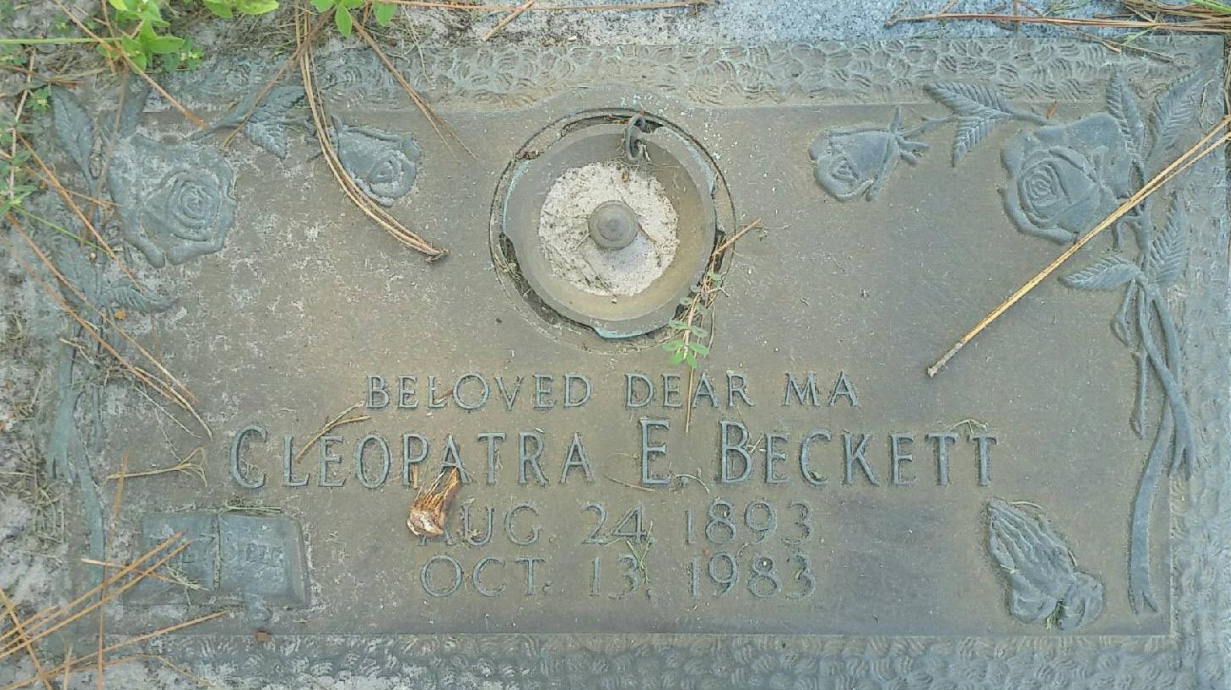
    Her name stopped me cold—Cleopatra Elisabeth Beckett.

    Cleopatra had been the name of my first cat—and, by extension, my first email address: cleo21.

    A coincidence? Maybe.
    But it felt like something more.

    A whisper from the past.
    A presence brushing against my life before I ever knew who she was.


    As a child, I was fascinated by the Egyptian queen—not just for her beauty, but for her power.
    It felt rare to see a woman admired for how she looked and still remembered for how she ruled.

    Even then, I understood that kind of power—subtle, strategic, often silent—was sometimes all a woman had.
    And sometimes, it was all she needed.


    My great-grandmother’s name was no mistake.

    Her mother, Emma, hadn’t just given her the name of one great queen—but two.

    A gesture of hope.
    A kind of elevation from her own humble working-class life.

    What mother doesn’t wish the best for her child?


    But in the late 1800s, ambition had its ceiling—especially for a young Black woman.
    Names could only take you so far.


    When I uncovered Cleopatra Beckett’s early life, I recoiled.

    She had ten children over her ninety years.

    The first, a daughter named Myrtle, was born when Cleopatra was just sixteen.
    The father, Charles Alfred Vaz, was forty-eight: a doctor, well-established.

    Already a father of twelve with another woman.
    And now, apparently, beginning a new lineage with my great-grandmother.


    By the time Cleopatra boarded a ship to New York—a year before Charles’s death—she had borne him five children.

    I kept wondering:
    Did she see Charles as a path to stability?
    Was she coerced? Exploited? Loved?

    Did she choose this life—or simply survive it?

    The truth is likely twisted in all these directions—
    a knot of powerlessness, resistance, and the kind of quiet calculation
    only a young Black girl with almost no options could be forced to make.


    Even that journey to New York was not straightforward.

    She was detained at Ellis Island for two days.

    The official reason?

    She was labelled “immoral.”


    Immoral…
    I read that word in the scripted log—it landed hard.

    It wasn’t the forty-eight-year-old man who, by modern standards, had groomed a child who was immoral.
    Nor the colonies, which had failed to raise the age of consent to sixteen, as the UK had done back in 1885.

    No.

    The burden of society’s moral standards fell squarely
    onto the lap of a thirty-year-old woman travelling abroad to see her sister.


    For two days, she was detained.

    Was she scared?
    Was she tired of the double standards—
    or did she take it all in her stride,
    without even a side-eye?


    I tried to trace Cleo’s ancestry, but hit a dead end.

    Births weren’t officially recorded before 1878,
    and records were sparse for Black or mixed-race families—
    especially those born out of wedlock.

    And truthfully, I had no desire to trace the man who’d fathered her.

    I slammed my laptop shut.
    I didn’t have the stomach for more.


    Years passed before I picked up the trail again.

    I found myself thinking about Cleopatra again.

    First, I dreamed of her—felt her presence, acknowledged it.

    Then came another dream: four ebony heads sitting on a shelf, their eyes closed.

    When I woke, I knew—
    I wasn’t done.

    There was more to know.
    More to understand.

    Like fog beginning to lift, the facts started coming quickly.

    I found Cleopatra referenced in a book.
    The author detailed her Ellis Island questioning:

    “…unmarried, is supported by a colored [sic] doctor by whom she has four children, the oldest of which is 13 years old.”

    I froze.

    Colored?
    I had assumed Charles Vaz would be white, given his Portuguese heritage.
    But now, I wasn’t sure.

    I leaned in.
    I contacted the author.

    To my shock, she responded immediately—kindly, generously.

    Cleopatra had been travelling for a medical operation, and yes, the record was correct:
    Charles was ‘coloured.’


    I searched more.
    His partner had been alive in Panama the entire time he was with Cleopatra in Jamaica.

    Did these women know about each other?

    A year after Cleopatra travelled to New York, Charles married that partner—
    just months before his death.

    One woman was invited to secure her name.
    The other was left behind.


    How did Cleopatra feel?

    Did he arrange support for her and their children?

    The youngest—my grandfather—was just nine.

    Or were they all left behind, written out of his ending?

    Did the children ever get to say goodbye?


    A knot of emotion rose in me—
    questions tangled with sadness.

    This didn’t feel like a happy ending.


    By now, I’d decided to trace this man who had fathered seventeen children in sixty-three years.
    How could he afford it?

    As a ‘coloured’ doctor, Charles had done remarkably well—
    he’d earned medals from the UK Navy for his service.

    His father, Horatio, had lived a more modest life—
    only two children with a wife of Scottish descent.

    But he’d passed down a name and the legal standing that gave Charles his head start.


    Like many, I turned to OpenAI and asked if Horatio’s job as a clerk
    was common for children of the formerly enslaved.

    Slavery ended in 1834.
    Horatio would’ve been five.


    The model’s response left my jaw slack.

    Horatio’s life wasn’t typical—it was exceptional.

    He wasn’t just any clerk;
    he’d been the crier of the Supreme Court and the Kingston circuit court.


    I’d assumed Charles embodied white privilege.

    But now, I was watching how Black and brown Jamaicans navigated—
    sometimes even flourished—within colonial power structures.


    Horatio had stepped into the middle class.

    As a respected member of the Masonic lodge,
    he was entrusted with caring for a young Black orphan, Augustus Williams.

    I even found a letter Horatio wrote to Barnardo’s in London,
    vouching for the boy’s character.


    And Horatio’s mother?

    When I finally found her, I found another woman, silenced and left behind.
    Another mother desperate to give her child what she never had.

    Elizabeth Thomas Massias—a ghost in the records—
    had gifted her son a double-barrelled name stitched with whispers:
    Massias. Vaz.


    The names Massias and Vaz are deeply rooted in the Sephardic Jewish community
    that arrived in Jamaica from Portugal during the Inquisition.

    They had, by then, intertwined with the local Black population
    through generations of marriages and births.

    Though there are no official records of confirmation,
    the names in the area around that time suggest Massias was a proprietor
    and the Vaz family was respected within the Masonic community.


    This wasn’t the machinery of dominant white colonialism.
    This was how the marginalised navigated, subverted, and reshaped cultural practices
    to carve out space where none was offered.


    In another quiet rejection of his paternity,
    George Horatio Vaz wasn’t registered in the synagogue—as his name might suggest—
    but in the church.

    Another inch towards plausible deniability.
    Another sidestep around a father’s name.


    These Sephardic Jewish names weren’t outside the system.
    They were part of it.


    Elizabeth’s father had standing, just enough to grant her some protection.

    But she was still insignificant.

    Just like Cleopatra, born to a Jamaican labourer.
    Just like my Nana—diminished by the systems that gave men power and handed women responsibility.


    The stories of these women—
    and the children they fiercely protected—
    show us something else too:

    Race, class, and patriarchy are a soup none of us escape.
  • What If Rest Feels Like Dying?

    What If Rest Feels Like Dying?

    The Dream

    Holiday—
    I didn’t want
    to do anything.

    I recognised
    I didn’t have
    long left.

    I felt
    desperate.

    It dawned on me…

    I might be
    depressed.

    The Meaning

    the holiday
    When rest is mistaken for disinterest.

    time running out
    Shouldn’t I be doing… all the things? This is the guilt of not conforming to toxic productivity.

    naming the depression
    Maybe what I’m calling depression… is not being anxious. Maybe what looks like laziness… holds weight.

    What Lingers…

    What if it’s not depression—just resting for the first time ever?

    What if doing nothing is how the deeper whispers finally get heard?


    Marginalia

    I’ve quit a mismatched school and am waiting for the new one to start. I’m supposed to be studying, but instead I’m ferociously digging into my ancestry, chasing a dream of The House That Contains Everything.

    Not having anything clear to do, for an overachiever, is akin to dying.
    An existential crisis wired in from the start: if you’re not achieving, not producing, you’re useless.

    The question rises: am I procrastinating? Does this research mean anything at all? Does it tie into a bigger picture perhaps?

    But the void doesn’t stay empty. It fills itself—
    not with herbal work,
    but with whispers.
    With intuition.
    With dreams.

    I’m listening. Remembering.
    Not doing. Not achieving.

  • What If Overflow Isn’t Failure?

    What If Overflow Isn’t Failure?

    The Dream

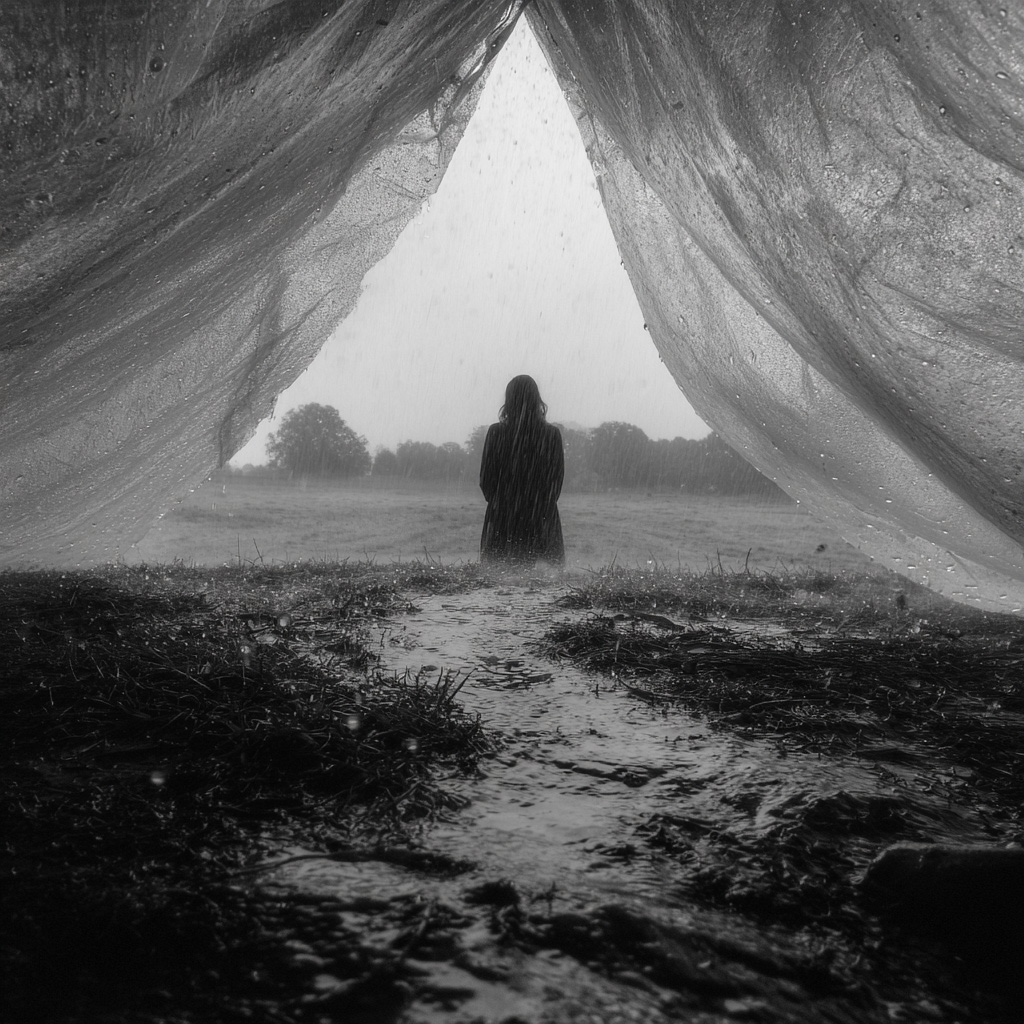
    I was outside,
    under a tarp.

    It was raining—
    relentlessly.

    A leak
    in the roof.

    I made something
    to drain the water away.

    The rain
    intensified.

    Eventually,
    the water was overflowing—

    even the drain
    I built
    couldn’t handle it.

    The Meaning

    the tarp
    Attempting to protect myself from being emotionally flooded. I hide under temporary protection but this is thin, makeshift and exposed.

    the leak
    The emotions are being managed. Even though they’re leaking through the tarp, I attempt to problem solve them away with structure and practicality.

    the overflow
    The feelings are too much. Even the systems in place to stop them from becoming overwhelming can’t cope.

    What Lingers…

    What if no structure can hold what needs to be felt?

    What if overflow isn’t failure, but the truth finally arriving?

    Marginalia

    It feels like a big responsibility, digging into ancestry that was meant to remain unknown. This dream carries the weight of that. I think of the rain as my Nan and Mum—both of whom either didn’t want, or don’t care, to dig up this past.

    But for me, even though it’s their story, it’s mine too.

    I’ve learned that simply giving these stories air makes them lighter. What was heavy in silence begins to lose its weight when spoken.

    And whatever their reasons for not looking, I want to say: it’s OK. I understand.

    You can read our story [here].

  • The House That Contains Everything

    The House That Contains Everything

    The Dream

    Eating food
    with a friend I volunteer with—

    the meal was amazing,
    complex,
    tasty.

    I needed to go shopping.

    Instead I
    showed my partner
    around the house
    we were living in.

    I’d finally decided
    I could face
    the huge task
    of renovating it—

    it was fucking massive.

    I’d already explored
    the newer parts—
    carpets, beds,
    salvageable things
    from the previous owner.

    I said it was all easy enough—
    except the freezing cold room
    next to the front door.

    It had bars
    on the inside.

    It felt haunted.

    We toured the old wing—
    cold rooms,
    ancient furniture.

    He pointed
    to a sloping wall.
    “Subsidence,” he said.

    I wanted to reuse
    the furniture.
    He wasn’t keen.

    The rooms were filled
    with character,
    creepy in places—

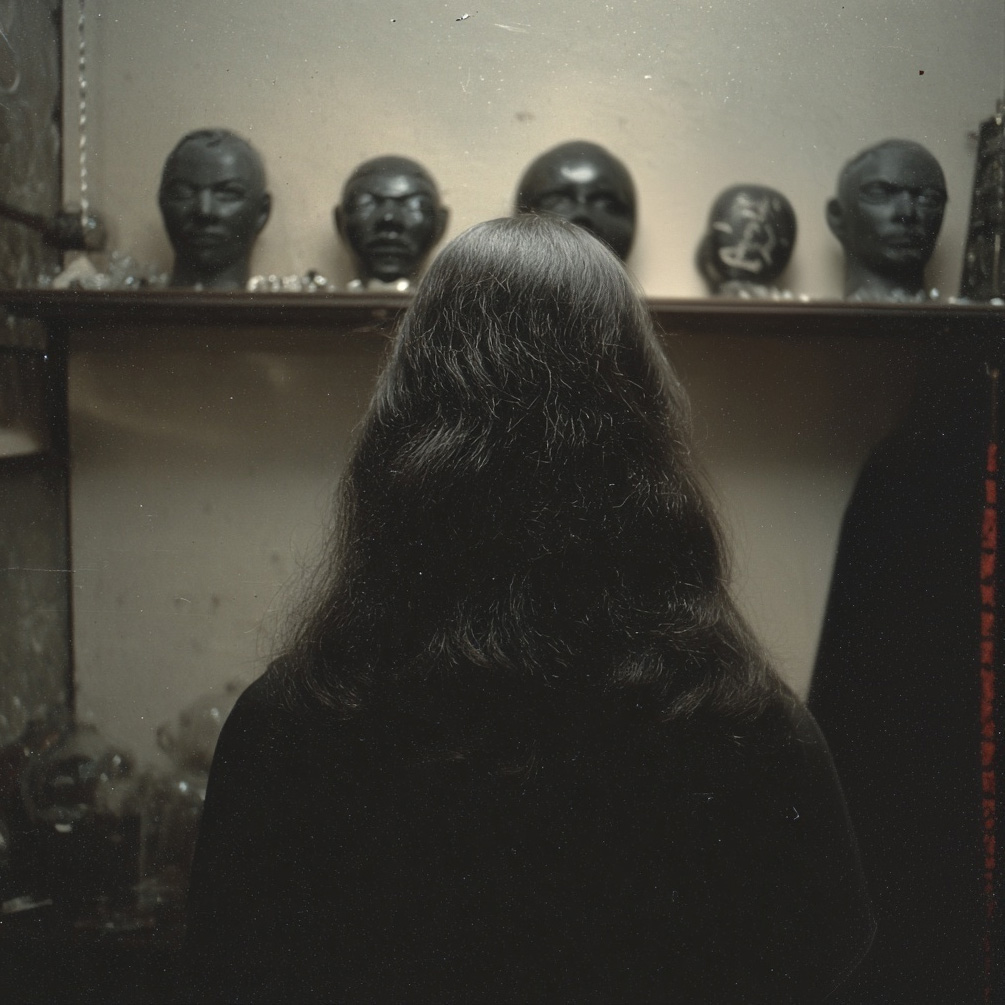
    four ebony heads,
    their eyes closed
    sat on one shelf.

    Black magician capes
    with crystal balls at the collar,
    displayed on mannequins.

    Shelves
    of black stone balls
    with white inscriptions.

    Sheds
    connected to bedrooms,
    stuffed with bikes
    and bits of metal.

    I met a friend
    celebrating their graduation,
    wondering whether
    to tell social media.

    I encouraged her.

    My partner
    chatted—
    with a woman concerned
    about her son
    working illegally.

    I said, flippantly,
    “It’s hard—
    but it’s time
    to let him go.”

    To my partner
    I said
    we’d need to sort the bathroom—
    tiny.

    He wanted
    to rent the old wing out.

    I wanted
    to keep parts of it—
    even if the stuff wasn’t mine,
    I liked their character.

    Then,
    I entered
    the new wing—

    rooms connected
    by ladders
    and slides,

    rooms linking into others
    in strange ways.

    The décor was simple—
    but the structure,

    it was wild.

    The Meaning

    the meal
    Connection. Nourishment. Shared appreciation for something complex.

    the house
    My entire psyche—and here? It’s sprawling. Too big to casually renovate.
    I’m living inside my own complexity, and for the first time, saying, yeah, I can handle this.

    partner as witness
    He’s not the fixer, I am.
    He observes, comments, critiques, offers strategies
    but I’m the one touring him.
    He sees flaws. I see potential.

    room with bars
    The reception room by the front door. Freezing cold and determined to keep everything in. The trauma vault.
    It’s cold, defensive, possibly haunted.
    And whilst it’s not fixed, it is acknowledged.

    the old wing
    Memory. Inheritance. My ancestral/psycho-spiritual archive.
    These are my dormant powers, forgotten stories, and unclaimed emotional objects.I want to keep them because they carry depth.

    bike rooms
    Junk drawers of the psyche. Unsorted, but not useless.

    slides, ladders.
    The newest part of myself. Not polished, but playful. This part is
    more connected, more dynamic and nonlinear.

    graduation
    Someone’s ready to share what they’ve accomplished and I encourage them
    I’m helping others to celebrate themselves.

    renting out the old wing
    I’m saying not everything needs to be useful. Some things are just part of who I am.

    What Lingers…

    What if shadow work isn’t about fixing, but finally deciding to live in every room?

    What if some things don’t need to be cleared out, just honoured as part of the architecture?


    Marginalia

    This dream holds more than I’ve even begun to unpack yet—but it was the catalyst.

    When I woke, I knew: those four heads were connected to my ancestors. I felt it in my gut. This was the moment I knew I needed to pick up my ancestral research again. Research that led me to finding out who those four heads belonged to.

    But it wasn’t until I shared the dream with a friend that something clicked. The room at the front of the house was Jimmy’s.

    Working more intuitively, I’ve learned to trust that kind of knowing. Without it, I wouldn’t have gotten this far.

    And the more I trust, the more I find is revealed.

  • What If the Sea Takes It All?

    What If the Sea Takes It All?

    The Dream

    Staying
    in shared accommodation
    on holiday.

    I was in a rush
    to leave.

    I’d left it too late
    for my onward journey—
    it would be very late
    when I arrived.

    I worried
    about cleaning
    before I left.

    I relaxed
    it was okay—
    others were staying on.

    At my next location,
    the weather
    was glorious.

    The sea
    was wild.

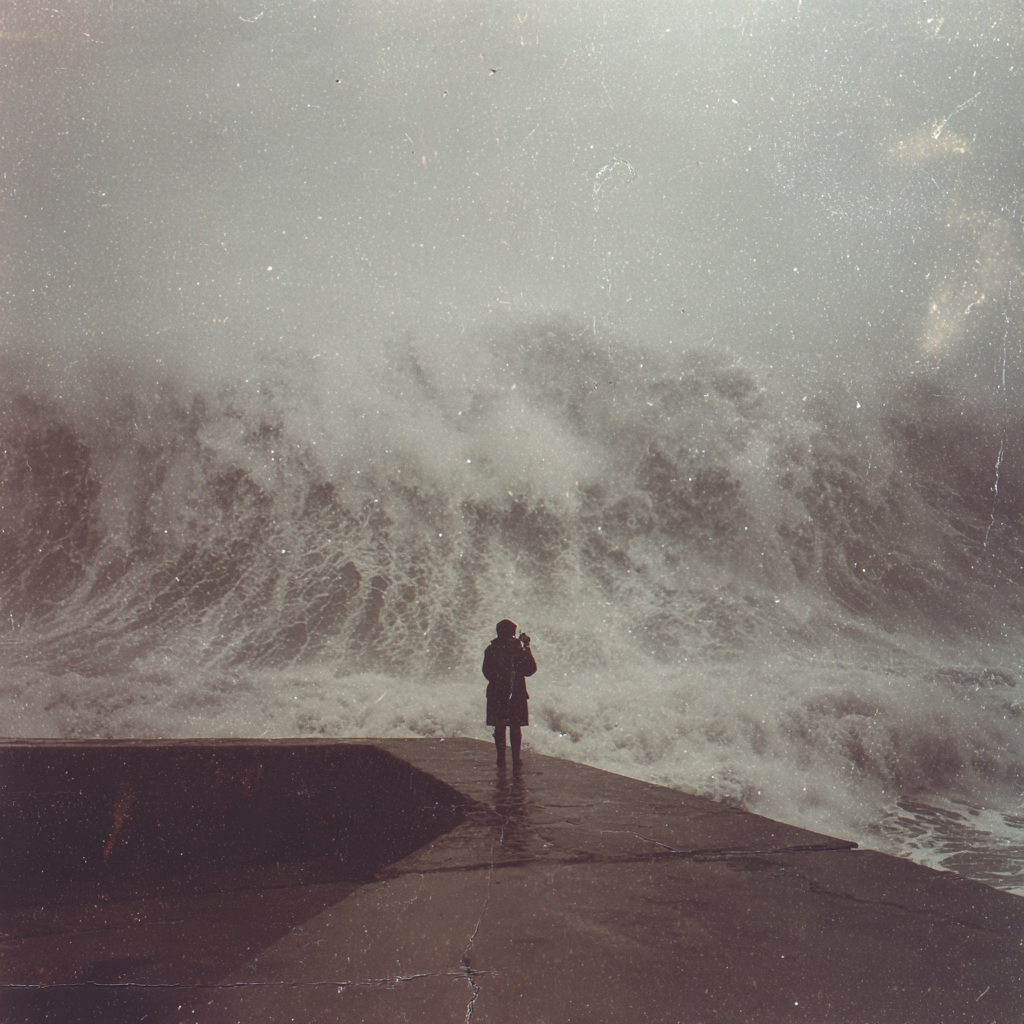
    I stood on the prom,
    confused
    at what I was looking at.

    Then I realised:

    the sea wall
    was made of glass,
    holding back the sea
    from consuming
    the land.

    My camera
    had fallen into the water
    somewhere—

    but it had been returned
    onto the top of the sea wall.

    I tried
    to take photos
    with it.

    I cleaned
    the wet lens.

    A sunburned ex-boyfriend
    stood nearby,
    chest on show,
    trying
    to flirt with me.

    I pondered
    the benefit
    of protecting the land.

    I understood
    it was inhabited—

    but isn’t it just evolution
    to let things
    change?

    The Meaning

    shared space
    Another borrowed place. I’m on the move—again. But this time? I’m not cleaning. I’m letting go.

    late arrival, wild sea
    The delay gives way to glory. It’s not just beautiful—it’s threatening to consume everything. The sea is vast, wild, and held back by something thin and artificial.

    glass sea wall
    This is a fragile defence against overwhelming emotions or truths. And I’m there trying to understand my role in the protection, or the surrender to the inevitable.

    the camera lost and returned
    I lost my tool for witnessing and the sea/my emotional unconscious gave it back. But it’s blurry, the lens is wet, my perspective needs cleaning.

    sunburned ex
    Here we go again! The ex representing past impulses—all while I’m mid-epiphany.

    the evolution question
    I’m questioning the validity of trying to protect anything at all. The land is meaningful, but is resistance to change even reasonable? This is my psyche trying to reconcile grief, detachment, collapse, and transformation.

    What Lingers…

    What if perspective doesn’t need replacing, only cleaning?

    What if evolution isn’t in protection, but in the willingness to let something go?


    Marginalia

    This dream feels like a continuation of the questioning in This Path Used To Be Shared—how I’ve held space, even lineage, with others.

    But now, there’s a shift: I’m no longer trying to disappear like The Considerate Ghost. I’m ready to move on. Ready to pass the baton of “impact” to someone else.

    And maybe for the first time, I’m starting to believe that what I’m passing on doesn’t need to be sanitised.

    Of all my dreams, this one’s questions linger the most in waking life:

    Do I maintain the status quo, or let everything be washed away in the current of natural evolution?

    And when it comes to energetic lineage—

    Isn’t there a difference between burying something and letting it be washed away?

    One is shame.
    The other is surrender.

  • No Car, Still Loved

    No Car, Still Loved

    The Dream

    A passionate embrace.

    His mum entered.

    She could see
    the love.

    She approved.

    In the city,
    attending
    an event.

    I had
    free parking.

    When I went
    to collect my car,
    it was already
    on a transporter
    in the distance.

    I visited
    an apartment.

    We’d gathered brochures
    from the event.

    A couple of us
    headed home
    together.

    The Meaning

    romantic intensity
    Embodied desire without shame.  I’m not asking for permission.

    his mother
    This is my psyche healing around the idea that passion and approval can coexist. No shame. Just recognition.

    car towing
    Someone has moved the goalposts. Autonomy interrupted.

    returning home
    Even though my vehicle has been taken away, I’m still returning with insight of my experiences and I have companions for the journey.

    What Lingers…

    What if passion didn’t need permission to be real, or witnessed to be valid?

    What if the return home was the proof—that something meaningful happened, even if the space couldn’t hold it?


    Marginalia

    At the time of this dream, I’d recently left a school that hadn’t worked out for me. The dream reflects the sense of losing a vehicle that I believed would take me where I wanted to go.

    Still, despite that loss, I felt I had something to carry forward from the experience. Like most things that don’t go as planned, there were lessons I could take with me on the journey ahead.

    There’s a strange exposure in dreaming of someone who isn’t your partner—like your subconscious got caught with its hand in the sweetie jar. But I don’t think the dream was about them, exactly. They were a stand-in. A symbol of the passion I’m finally letting myself feel for the path I’m on. It’s a theme I explore again in Walking Away With The Door Still Open.

  • The Mentor I Didn’t Tell Anyone About

    The Mentor I Didn’t Tell Anyone About

    The Dream

    Mary Anne Hobbs—
    a famous DJ.

    She was my mentor
    at herb school.

    She already knew
    my partner.

    I didn’t tell him
    she was mentoring me.

    Or her
    that I was connected to him.

    I wanted
    to make my own
    connection.

    The Meaning

    the mentor
    Archetypes collide. She’s sonic, intuitive, non-mainstream. A curator of atmosphere. I dreamed her into a herbal mentor—another kind of intuitive guide. One who deals in plants instead of sound. I’m linking her to healing and resonance. Medicine with vibe and atmosphere. This isn’t about rules, it’s about knowing when something feels right.

    secrecy
    I’m carving out an identity that’s mine alone. Even if they know each other, my relationship with her is sovereign. This is symbolic individuation. I’m saying: My learning, is mine alone. It doesn’t need to be earned through ‘relations’ I’m actively stepping away from it’s not what you know but who you know and stepping out into the world as an individual.

    the school
    I’m in learning mode. But this isn’t institutional—it’s mentorship.
    Not curriculum. Connection. This isn’t a class—it’s a transmission. Wisdom by osmosis.

    What Lingers…

    What if true learning doesn’t follow curriculum, but connection?

    What if resonance is reason enough to follow a path—no permission needed?


    Marginalia

    Sometimes I feel an urge to hurry—to learn as much as I can, as quickly as possible. Other times, I hold back, aware of how easily I’m influenced by the information I receive, and wanting to see how much I can intuitively remember.

    It feels fitting that I’ve chosen Mary Anne Hobbs as my herbal tutor. Completely unrelated, sideways learning—much like the journey I began when I first started sifting through my ancestry after a dream I’d had. At the time, I thought it was just a distracting side hustle.

    Now I can see how it’s all beginning to weave together.

  • Cleopatra | Dream of the Name Unspoken

    Cleopatra | Dream of the Name Unspoken

    The Dream

    I dreamt
    of my great-grandmother.

    I only found out about her
    a few years ago,
    after a DNA test
    showed I have African roots.

    She was Jamaican.

    At 15,
    she became the concubine
    of my great-grandfather—

    a Portuguese doctor
    in his late 40s,
    already with a family.

    She gave birth
    to seven of his children.

    She’s mentioned
    in a book.

    She was deported from New York
    on the grounds
    of being ‘immoral.’

    She travelled
    to the UK and US
    in her lifetime.

    I’m not sure
    why I’m remembering her now.

    Her name
    was Cleopatra.

    My first black cat
    was called Cleopatra.

    My email handle
    is “cleo21.”

    My grandmother
    didn’t want anyone
    to know
    about my mother’s father.

    Another man—
    her husband—
    was listed
    on my mum’s birth certificate.

    My mother’s biological father
    and his family
    knew she existed.

    They’d been told
    she’d moved
    to Australia.

    They all knew about her.
    She
    never knew
    about them.

    The Meaning

    the woman herself
    Cleopatra is not just a name. She’s my great-grandmother. A teenage girl swept into a colonial arrangement— her story buried with scandal and shame. She reappears now not just as history, but as witness. As legacy.

    the name
    I’ve been carrying her name unconsciously for years—in my pets, my usernames. I don’t believe this is a coincidence. I think it’s lineage trying to find voice. I was already remembering her, long before I “knew” her.

    hidden lineage
    My mother was erased from her paternal story. My great-grandmother was deported for “immorality.” I’m the first in this line to say: this happened. I’m breaking silence simply by remembering. Cleo is stepping into that role.

    arrival
    I didn’t summon her.
    She came to me.

    I’m the one who can carry her story—not with shame or denial, but with understanding.

    What Lingers…

    What if remembering is a form of repair—stronger than silence, a candle against shame?

    What if some names live in the body long before they’re spoken aloud?


    Marginalia

    I was twenty-one when I took Cleo’s name into my email address—the same age I began experiencing the panic attacks I later connected to another of my ancestors, over twenty years later.

    Perhaps those events are unrelated, or even chance; it all depends on what you believe. To me, not everything has to be explainable to be true.

    This dream, along with The House That Contains Everything, sparked another deep dive into my ancestral history. The research felt so unrelated to my herbal path that, out of curiosity, I uploaded my natal chart to an AI—to see whether I was on the right track.

    What I found out shocked me.

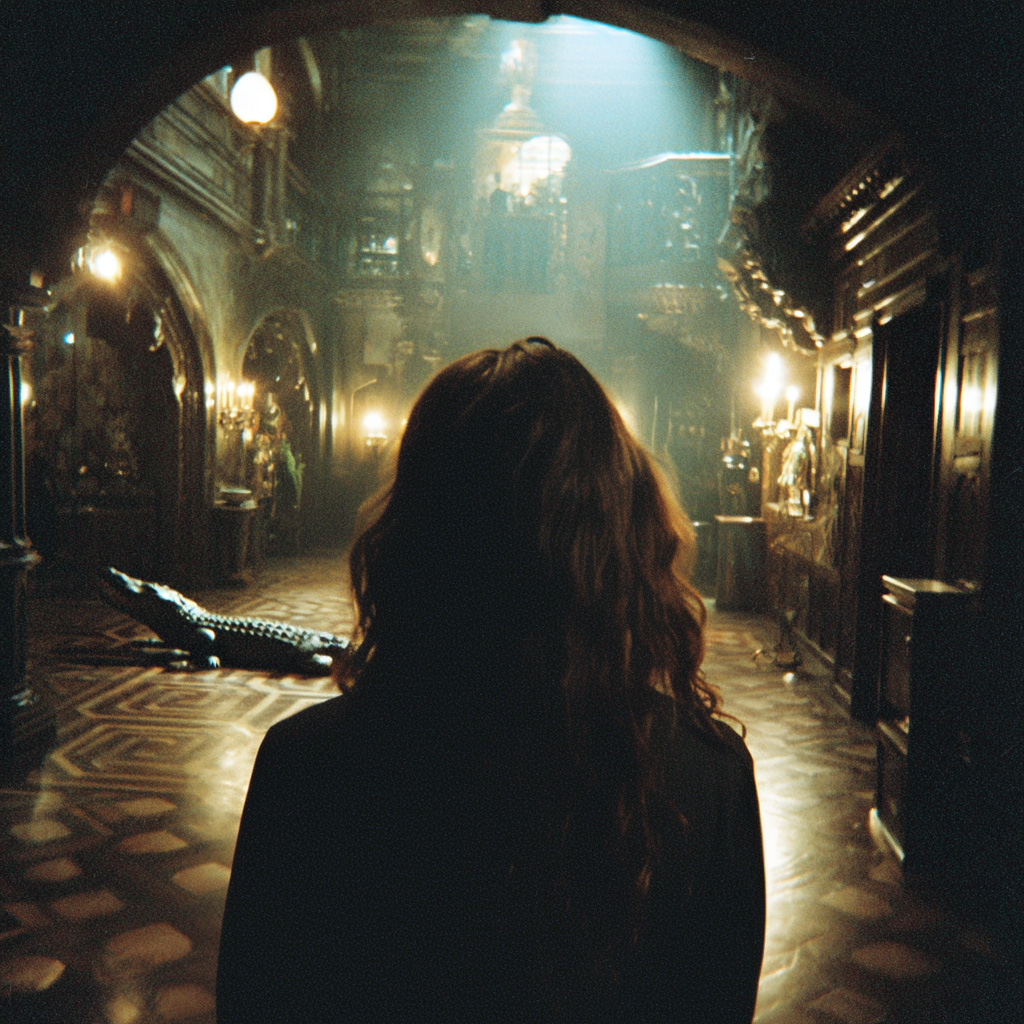
  • The Alligator in the Hallway

    The Alligator in the Hallway

    The Dream

    Living in a house
    with another family.

    It was decorated
    in the Addams Family style—
    I loved it.

    We’d just bought
    a new alligator
    for the hallway.

    I was turning some lights off;
    it was too bright.

    I picked a man
    to partner with.

    I knew
    he would be a good father
    to my children.

    Old work colleagues
    joined me at the house.

    We were happily reunited—
    jovial.

    I was getting ready
    for a lecture.

    I was so late.

    As I entered the hall,
    everyone
    was leaving.

    The Meaning

    the alligator in the hallway
    My inner beast has become a decorative accessory. Having finally got a grip on that energy, I’ve placed it front of house. This indicates I’m not hiding the more fearful elements of my personality and whilst they’re no longer in control of me, they serve as a warning to all who enter.

    turning off the lights
    I’m managing the energy in my space. Too bright? That’s overstimulation. I’m not seeking clarity at all costs. I don’t need every corner of my psyche floodlit; mystery and shadows are part of the package now.

    choosing a father
    Intentional choices, not just for romance, but legacy. I’m not dreaming of being saved, I’m choosing a reliable co-pilot. 

    old work colleagues
    Reconnecting with past versions of myself, or perhaps reconciling with abandoned parts of my identity. It’s jovial, not regretful. These are my professional ghosts, and now they’re guests in my new kookie home.

    missing the lecture
    I’m scrambling for something—knowledge, approval, relevance—and yet I’m arriving too late. Everyone’s leaving. There’s a fear inside of lost time, of missing out.

    What Lingers…

    What if taming the inner beast doesn’t mean hiding it?

    What if wisdom doesn’t come from the lecture hall, but shows up in hallways and hindsight?


    Marginalia

    Looking back on this dream, it has the cringe energy of “Welcome! Come on in,” followed immediately by “Watch the alligator—he bites.” I explore this a bit more in my poem What I Carry Isn’t All Mine.

    It takes time to feel okay with the parts of yourself that aren’t exactly socially smooth—like dropping truth bombs or asking questions that make people squirm.